


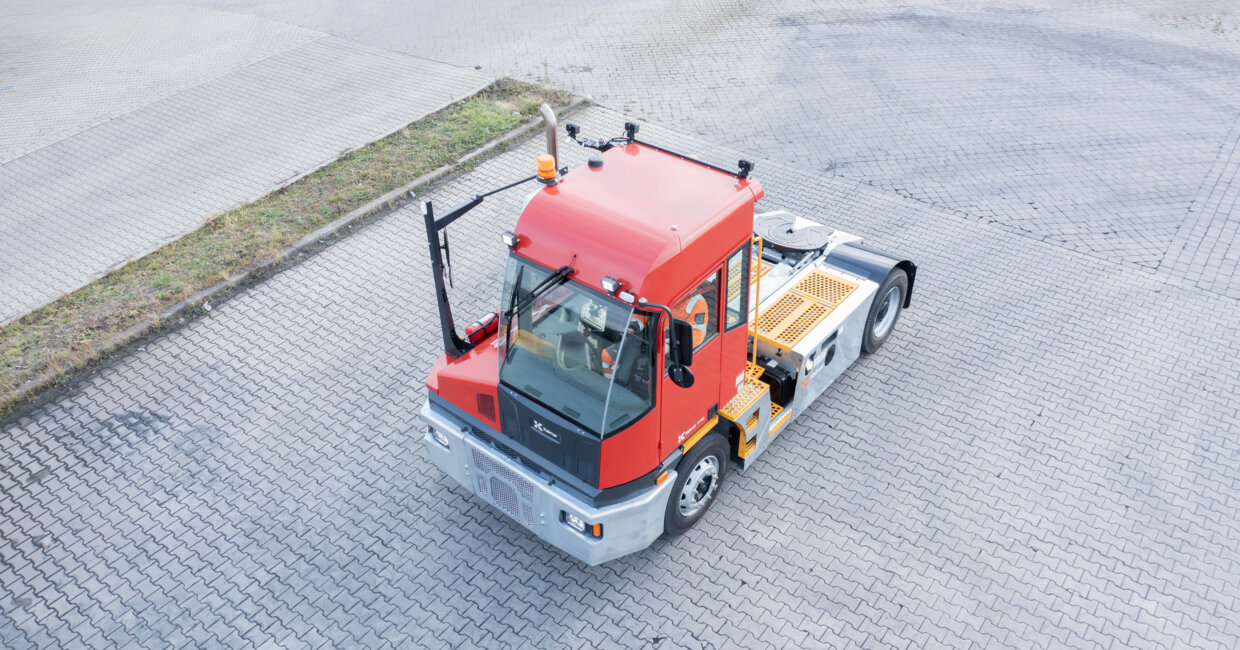
Why is a shunt truck better than a road truck?
We understand that time is money, and moving trailers around your yard safely and efficiently is critical to keeping your operation running smoothly. If you are still using regular road trucks for this work, it may be time to ask whether a purpose-built shunt truck would be a better fit for the job.
Are road trucks still the right choice?
Road trucks are designed primarily for transporting heavy loads on public roads, not for frequent trailer movements in busy yards where space is limited and every minute matters.
For operations that involve repeatedly moving, positioning and switching trailers, a purpose-built shunt truck such as a Kalmar Terminal Tractor offers an alternative designed specifically for this type of work. Shunt trucks are used across distribution centres, warehouses, ports and terminals to keep trailers moving efficiently around the site.
Why use a shunt truck?
Whether trailers need to be moved between parking areas and loading bays, repositioned around a distribution centre or transferred within a terminal, a shunt truck provides a dedicated solution for getting trailers where they need to go.
A shunt truck earns its place in the yard by making frequent trailer moves faster, smoother and more efficient. Its compact dimensions help the driver negotiate tight corners, manoeuvre around loading bays and position trailers with less repeated reversing. For example, a Kalmar Terminal Tractor has a wheelbase of less than 3 metres and a turning radius of less than 6 metres, compared with around 7 metres for a conventional road tractor.
The advantages continue when connecting and lifting the trailer. A shunt truck’s hydraulic fifth wheel allows the driver to raise the trailer from inside the cab in only a few seconds. By comparison, a road-truck driver must leave the cab and use a manual crank, adding time, physical effort and potential risk to every move.
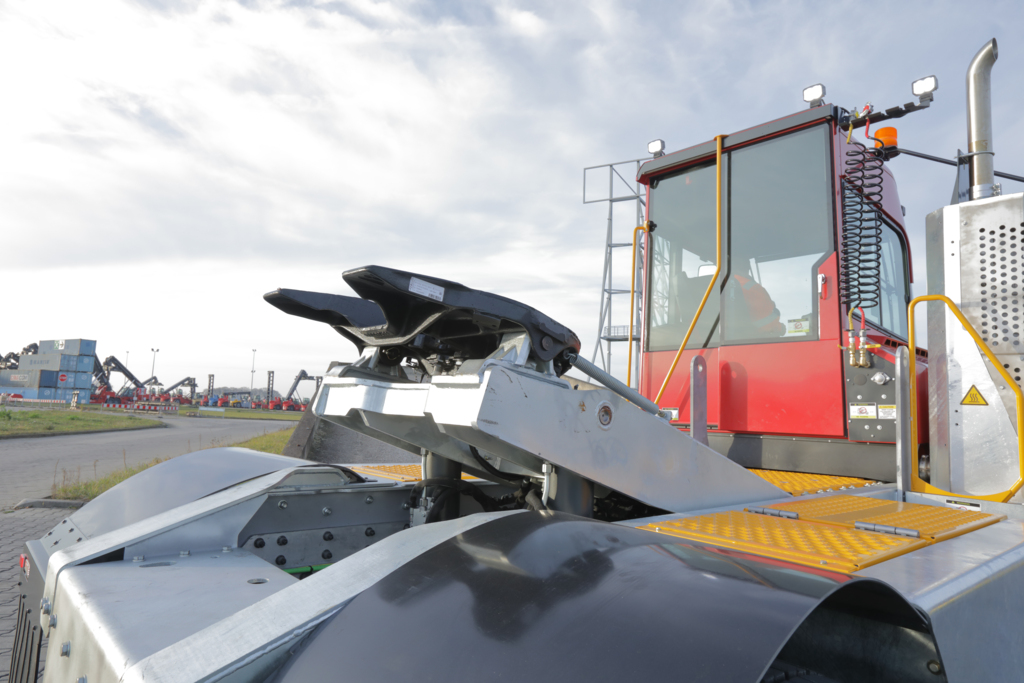
The rear sliding door on a Kalmar Terminal Tractor also gives the driver direct access to the work platform, making it quicker and safer to connect the trailer’s air and electrical lines. By reducing reversing, manual cranking and repeated cab entry, these features can help a shunt truck complete an individual trailer movement 3–5 times faster than a conventional road tractor.
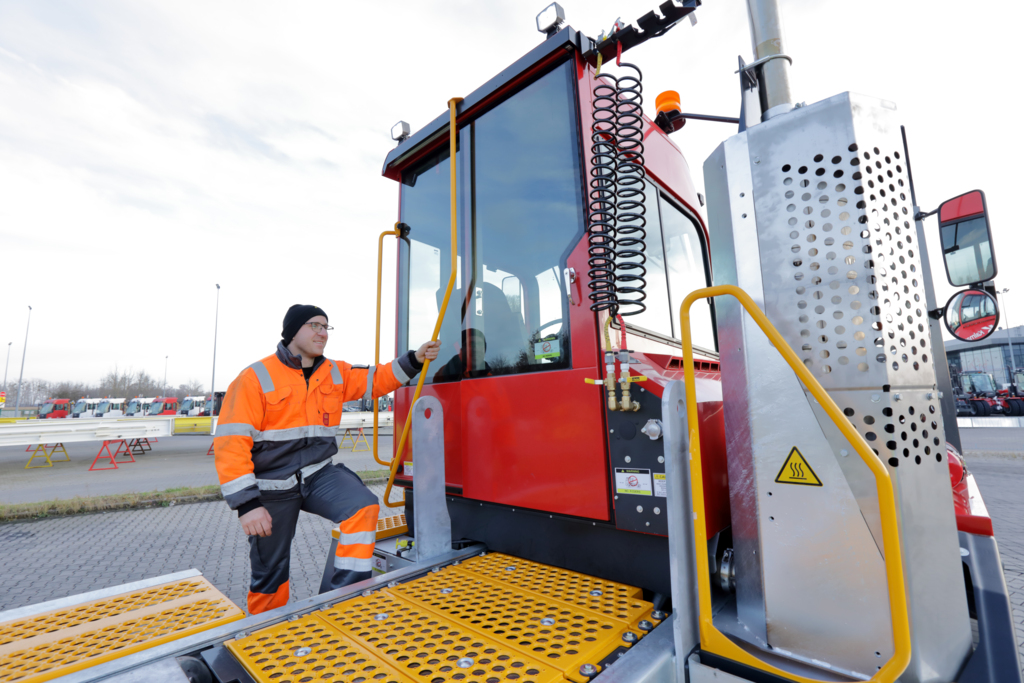
Whether moving trailers between parking areas and loading bays, repositioning them around a distribution centre or transferring them within a terminal, a shunt truck helps keep every movement flowing.
Work faster and safer with a shunt truck
A shunt truck is purpose-built for moving trailers around yards and terminals. In a tight, high-volume yard, a shunt truck can outperform a conventional road truck by completing the same trailer-moving task 3 to 5 times faster. The reason is simple: while a road truck is primarily designed to transport loads on public roads, a shunt truck is engineered for frequent trailer movements around yards, loading bays and terminals.
So, how does a shunt truck help operators work faster and safer?
- Faster, more efficient trailer handling. A shunt truck is fitted with a hydraulic fifth wheel, allowing the driver to connect, lift and lower trailers without leaving the cab. By comparison, a road-truck driver will typically need to leave the cab and manually crank the trailer’s landing gear each time a trailer is connected or disconnected. Across a busy shift, removing these additional steps can save considerable time and physical effort.
- Greater agility and smoother manoeuvring. With its shorter wheelbase and tighter turning circle, a shunt truck is better suited to confined yards and sharp dock-to-staging turns. It can position trailers more precisely, with less repeated reversing and fewer corrective movements. A road truck, with its longer wheelbase and turning circle of more than seven metres, will generally find the same tight manoeuvres more challenging.
Together, these features help the driver complete repeated trailer movements more safely and efficiently than when using a road truck for the same specialised work.
A safer, more comfortable cab
These details matter in a busy yard. A road truck may be comfortable on the highway, but its cab and access points are not designed around the repeated entry, exit and trailer-connection cycles involved in shunting work.
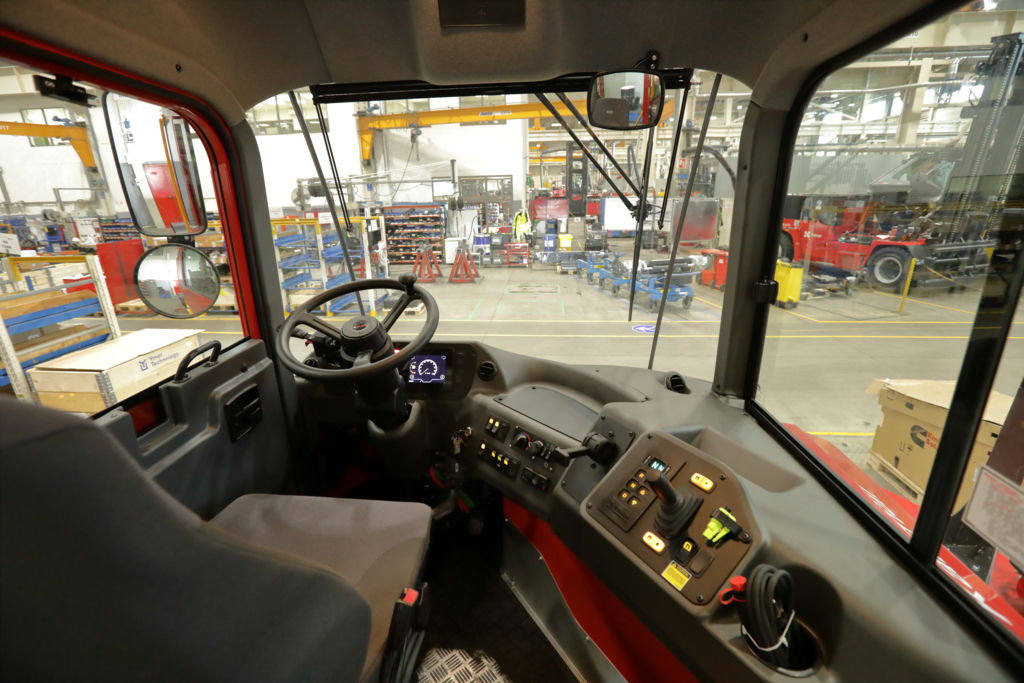
Designed around the driver. A shunt truck driver may connect, move and position trailers many times during a single shift. That is why the cab of a Kalmar Terminal Tractor is ergonomically designed to keep essential controls within easy reach, helping the driver work safely, comfortably and efficiently throughout the day.
Better visibility and safer access. Greater all-round visibility helps the driver remain aware of activity around the shunt truck and position trailers more quickly and precisely. Anti-slip materials are used on steps and standing areas, with cautionary yellow colouring highlighting key working zones. Three-point supports at each access point also help the driver enter and leave the cab safely.
More power, lower emission
Flexible power options. The Kalmar Terminal Tractor range offers a choice of power sources, allowing you to select the shunt truck that best matches your operating requirements, infrastructure and emissions targets.
Efficient diesel performance. Kalmar’s diesel-powered shunt truck combines an efficient Cummins 6.7-litre engine with an Allison transmission. This low-revving, high-torque powertrain provides the pulling power required to move heavy trailers efficiently around the yard.
Less fuel, fewer emissions. The powertrain delivers traction performance comparable to the higher-powered 10–13-litre engines typically used in road trucks, while completing trailer movements faster and using up to 30% less fuel. Lower fuel consumption can also mean up to 30% fewer emissions.
All the power, zero emissions at the point of use. A Kalmar electric terminal tractor delivers the tractive power required for demanding shunt-truck operations using modular lithium-ion batteries. With zero emissions at the point of use, it offers an alternative for businesses looking to reduce the environmental impact of trailer movements and prepare for increasingly stringent emissions requirements.
Built for strength and a long working life
Intensive trailer handling places heavy demands on a vehicle. Repeated coupling, lifting, turning, braking and reversing place continuous stress on the vehicle, often throughout long and intensive shifts.
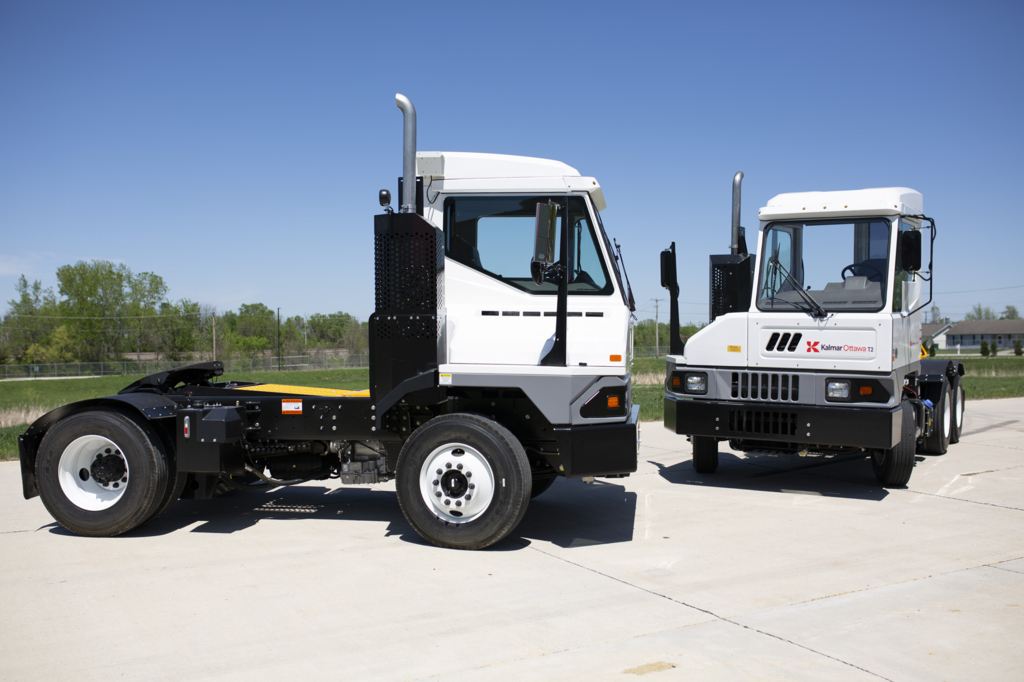
Kalmar Ottawa Terminal Tractors are engineered specifically for these conditions. Their robust chassis provides the strength and flexibility required for heavy-duty trailer handling, while the cab, front axle and rear axle are designed to withstand the repeated stresses of yard work.
A conventional road tractor is built primarily for transporting loads over distance. A shunt truck is designed for the constant stop-start movements, tight turns and frequent trailer changes that take place inside a working yard. This specialised design helps a Kalmar Terminal Tractor deliver reliable performance and a long working life in the environment it was created to handle.
Certified for greater flexibility
Selected Kalmar Terminal Tractor models are certified to move trailers for short distances on public roads as well as within the yard. This means the same shunt truck can support trailer movements between loading bays, staging areas, nearby facilities and short transfer routes.
For operators whose work extends beyond the yard boundary, this provides greater flexibility without losing the productivity advantages of a specialised shunt truck.
A smarter choice for trailer movements
When trailer handling is a central part of your operation, a shunt truck offers clear advantages over using a conventional road truck for the same task. It is designed to help your drivers move trailers more safely, efficiently and cost-effectively.
With a Kalmar Terminal Tractor, you can:
- Handle trailers more efficiently by lifting and lowering them directly from the cab.
- Connect trailers faster with safe, convenient access to air and electrical lines from the rear platform.
- Manoeuvre more easily in confined yards thanks to a shorter wheelbase and tighter turning circle.
- Position trailers with greater control through smoother handling and fewer corrective movements.
- Improve driver safety with easier cab access, safer climbing points and less need to repeatedly enter and leave the vehicle.
- Lower fuel consumption and emissions with an efficient diesel powertrain or a Kalmar electric terminal tractor producing zero emissions at the point of use.
- Rely on proven durability with a robust design engineered for demanding shunt truck operations.
Dollar for dollar, a Kalmar Terminal Tractor is a smart investment for businesses that need to keep trailers moving safely, efficiently and reliably. A road truck belongs on the road. For specialised trailer movements around the yard, a shunt truck is simply better suited to the job.
Shunt truck, yard truck or terminal tractor: what’s in a name?
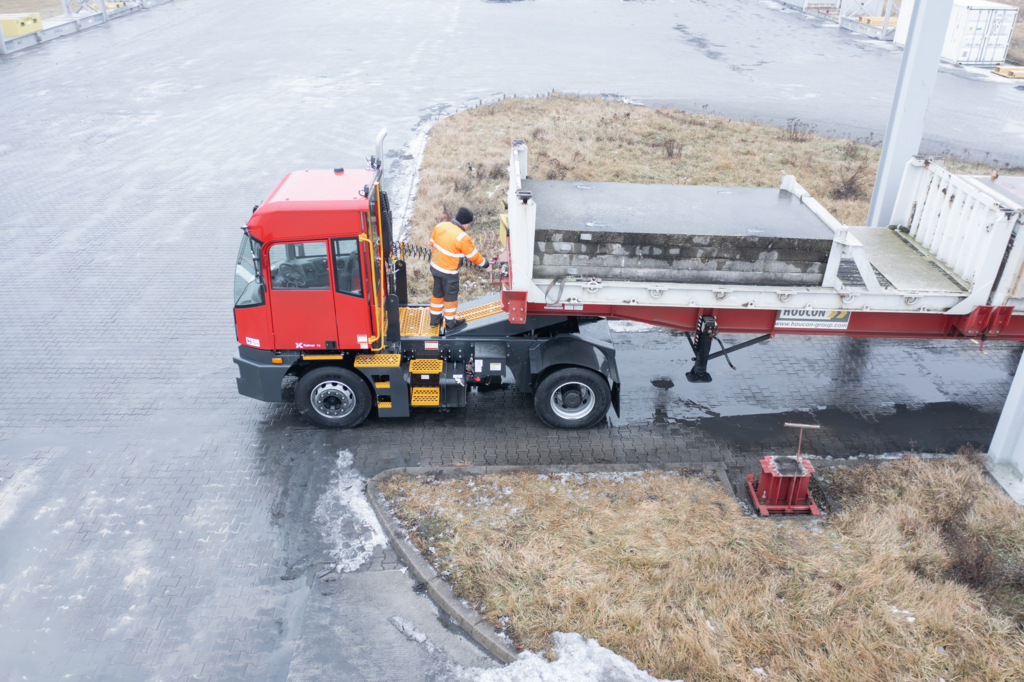
Ask operators in different parts of the world what they call the vehicle moving trailers around their yard, and you may receive very different answers. It could be a shunt truck in Canada, a yard truck or yard spotter in the US, or a yard shunter or tug in the UK. Australian professionals also use terms such as terminal tractor and yard tractor.
Behind those regional names is the same basic idea: a purpose-built vehicle that keeps trailers moving through busy logistics operations.
At Kalmar, we use Terminal Tractor as the official name across our global portfolio. It gives us one consistent way to describe the equipment, even though our customers may know it by a different name. So, while we refer to it as a Terminal Tractor, the name may change from market to market. The specialist job it does remains the same.
Related articles
Further reading
Subscribe and receive updates in your email
S'inscrire à nos publications